


Understanding Your Car’s Service Schedule

We’ll admit that proper car maintenance is not one of those things a lot of drivers get excited about. That being said, staying on top of things is absolutely essential for making sure your vehicle is at its best. Routine service is one of the best ways to maintain your car’s performance and gas mileage, and it can help you stay ahead of bigger problems down the road.
No one is born understanding maintenance schedules for vehicles, and a lot of us are not taught how to follow them. So today, we thought it would be helpful to go over some general guidelines that you should keep in mind when it comes to routine service.
Basics of Maintenance Schedules
Before we get into specifics, let’s go over some basics you should keep in mind regarding proper maintenance and service schedules. To start, one of the most important things is to make sure you look at the schedule for your specific vehicle. You can typically find it in your car’s owner’s manual, and it will give you the details you need.
Service schedules generally provide you with two pieces of information about the services that need to be performed: a mileage distance and a time limit. Mileage is usually provided in miles, while time is typically in months. The important thing to remember is that both numbers matter, and you need to have service performed when you reach either milestone, not both.
So if something says you should do it at 15,000 miles/12 months, then you need to have the work done every 15,000 miles, even if it has only been eight months since your last service. Also note that these guides are ongoing and additive; work at 15,000 miles also needs to be done when you hit 30,000 and 45,000 miles, etc. That can seem like a lot, but it is essential for your vehicle.
Honda’s Maintenance Minder System
One other detail that we want to mention is specific to Honda owners (we’re a Honda dealership, after all). Honda makes proper service for your vehicle easier by providing you with a Maintenance Minder system. Rather than expecting you to memorize your service schedule and keep an eye on mileage, this system automatically reminds you when it’s time.
You can use the Maintenance Minder system in a Honda to check the status of its engine oil, and it will provide an estimate of the motor oil’s remaining lifespan. Once the oil lifespan reaches 15%, the system will display a notice that you should have it changed soon. This makes it a lot easier to stay on top of one of the most common maintenance tasks.
Honda’s system will also display different letter and number codes as reminders for other types of routine service. Code A means it’s time for an oil change, while Code B indicates a more substantial maintenance visit with more inspections. Numbers indicate different types of inspections or replacements are needed, so you know exactly what your Honda requires.

An Example of a Vehicle Maintenance Schedule
Now that we have some basics out of the way, we should dig into an example of what your car’s service schedule might look like. We are using a Honda maintenance schedule as an example, just to keep things simple. You’ll want to look at the service schedule for your vehicle to see exactly what these numbers should be for you, though they’ll likely be similar.
Routine Inspections for Your Vehicle
Looking at the owner’s manual for the 2026 Honda CR-V, for example, we see that Honda recommends two types of inspections, starting with Routine Inspections. These are inspections that you can easily perform as the owner of your vehicle. You don’t have to take it to our service center for this, which keeps things simple.
Honda recommends you perform this type of inspection every time you wash your vehicle, when you stop for gas, and before any long trips. You probably won’t do this every time you get gas, but we definitely suggest this kind of inspection before any long-distance drive. A proper Routine Inspection involves:
- Checking your engine oil and coolant.
- Checking your brake fluid.
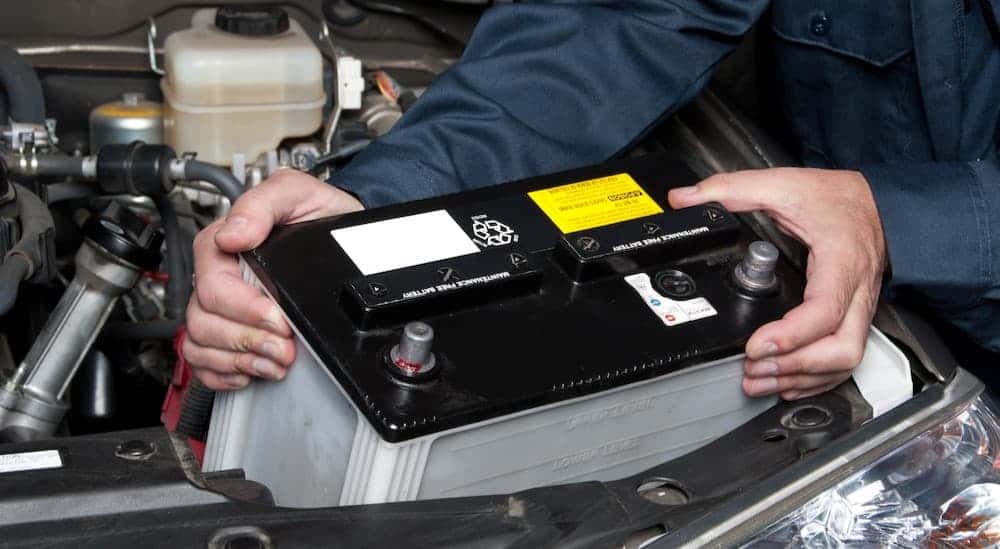
- Checking the condition of your battery.
- Checking your wiper blades and windshield wiper fluid.
- Checking your tire condition and tire pressure.
- Checking your exterior lights.
By checking these things, you ensure that your vehicle is safe on the road and can find issues before they become bigger problems. You might notice damage to one of your tires that could cause a crash, or find that one of your lights is out before getting a ticket for it. With practice, these inspections can become quite fast and almost second nature.
Periodic Inspections for Your Vehicle
In a perfect world, everyone would perform Routine Inspections every time they get gas or wash their car, but we know that doesn’t happen. With that in mind, it helps to give yourself a schedule for Periodic Inspections that covers the things we looked at above. This ensures you take care of these simple tasks, even if they slip your mind most of the time.
We suggest conducting these Periodic Inspections on a regular basis. Check your fluid levels, tire pressure, and exterior lights each month. You should check your wiper blades and give your battery a look every six months, just to be safe. One of the simplest ways to do this is to set a repeating event in the calendar on your phone, so you get convenient reminders.
Honda Maintenance Minder Codes
So far, we’ve looked at simple inspections you can handle on your own. Of course, your vehicle needs bigger services too, so let’s look at the Periodic Maintenance that your vehicle needs and how often you should take care of it. These are some key codes from the Honda Maintenance Minder system, so you don’t have to remember them.
Code A
- Replace engine oil.
Code B
- Replace engine oil and filter.
- Inspect front and rear brakes.
- Inspect suspension components.
- Inspect fluid levels.
- Inspect the exhaust system.
- Inspect fuel lines and connections.
- Inspect brake hoses and lines.
Code 2
- Replace the air cleaner element.
- Replace the dust and pollen filter.
- Inspect the drive belt.
Code 3
- Replace transmission fluid.
Code 4
- Replace spark plugs.
- Inspect valve clearance.
As you can see, most of these things involve inspecting different parts of your vehicle. Proper inspection requires lifting up your car to really get a good look at things. Bigger milestones require more work, especially when these things line up, so keep that in mind when scheduling a service or maintenance appointment.
Normal Conditions vs Severe Conditions
One final thing to note is that the typical maintenance schedule is for “normal conditions.” If you drive in what your car manufacturer defines as “severe conditions,” you’ll need to perform maintenance more frequently. Manufacturers often define severe conditions as one or more of the following:
- Driving fewer than five miles per trip (or ten in freezing temperatures).
- Driving in hot conditions (over 90 degrees).
- Extensive idling or long periods of stop-and-go driving.
- Driving with a roof-top carrier or in mountainous conditions.
- Driving on muddy, dusty, or icy roads.
If any of these conditions describe your normal driving—not just once or twice in a year—then you need to follow a stricter service schedule. The good news is that if you own a Honda, the Maintenance Minder system automatically compensates for severe conditions for most maintenance tasks.
We Can Help You Stay On Top of Maintenance
As you can see, proper inspections and service are not particularly difficult, but it can still be more than a lot of people can manage. Life gets busy, and having one more thing on your plate can become overwhelming. That’s why our team at Rick Hendrick Honda is here to take care of service for you and have you back on the road in no time.
0 comment(s) so far on Understanding Your Car’s Service Schedule